

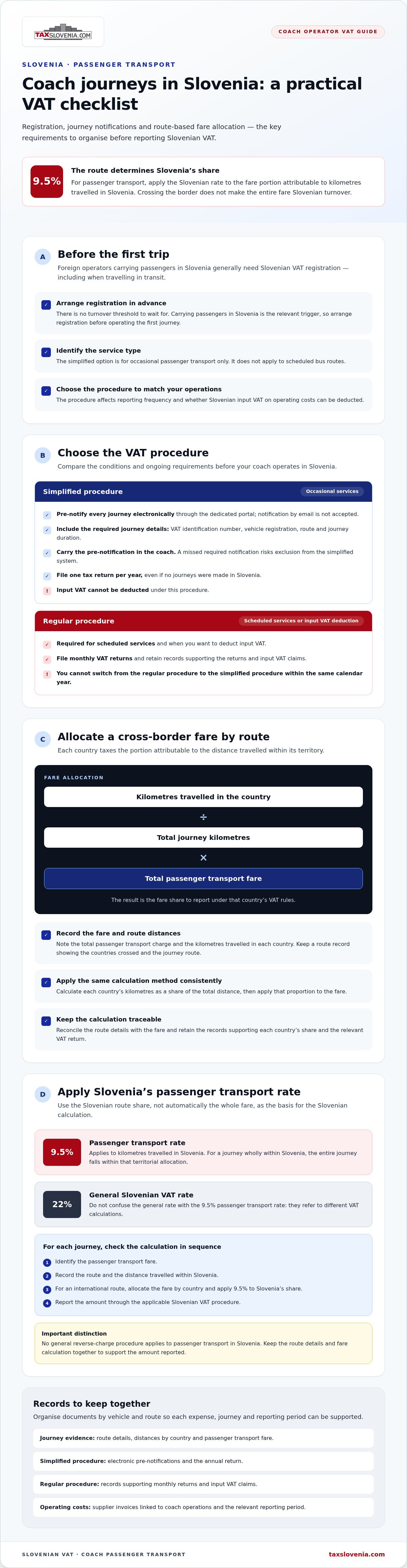
A coach journey through Slovenia can create VAT obligations even when it is only in transit. Foreign bus operators carrying passengers in Slovenia are generally required to register for Slovenian VAT. For cross-border passenger transport, the fare is apportioned according to the distance travelled in each country, with Slovenian kilometres taxed at 9.5%. This is the key rule for VAT on coach travel in Slovenia: the route determines where VAT applies.
Working out the VAT procedure before the first trip matters as much as allocating the fare correctly. This guide explains when VAT applies, when registration is needed and how to allocate passenger transport VAT across countries. It also compares Slovenia’s simplified procedure for occasional journeys with the regular VAT procedure, helping you identify which requirements apply to your operations.
Key Takeaways
- For occasional passenger transport, the simplified procedure requires electronic pre-notification of each journey and an annual tax return; input VAT cannot be deducted.
- Scheduled services, or a need to deduct input VAT, call for the regular Slovenian VAT procedure, with monthly returns.
- Prepare the journey notification with the VAT identification number, vehicle registration, route and journey duration, and keep it in the vehicle.
- Choose the procedure before operating: a missed journey notification can risk exclusion from the simplified system, and you cannot switch from the regular procedure to the simplified one within the same calendar year.
VAT registration before the first trip
There is no turnover threshold to wait for. Foreign coach operators carrying passengers in Slovenia generally need Slovenian VAT registration, including when travelling in transit. For operators planning coach journeys in Slovenia, this means arranging registration before the first trip.
Since April 2015, occasional passenger transport has had a simplified registration option. It applies only to occasional services, not scheduled bus routes. Under this procedure, operators submit one tax return per year, even if they made no journeys in Slovenia. Each journey must also be pre-notified electronically through the dedicated portal, not by email.
Prepare the notification with your VAT identification number, vehicle registration, route and journey duration, and carry the pre-notification in the coach. Missing a required notification risks exclusion from the simplified system. This procedure does not allow input VAT deductions. The regular procedure is required for scheduled services and when you want to deduct input VAT. Regular operators file monthly returns and cannot switch to the simplified procedure within the same calendar year.
There is no turnover threshold determining whether foreign operators must register; carrying passengers in Slovenia is the relevant trigger. The procedure also determines whether Slovenian VAT on operating costs can be deducted. Simplified registration excludes input VAT deductions, while the regular procedure permits them. Slovenia’s general VAT rate is 22%.
Organise supplier invoices and journey records by vehicle and route. Retain electronic pre-notifications and the annual return under simplified registration. For regular registration, keep records supporting monthly returns and input VAT claims. These documents link each expense to coach operations and the relevant reporting period.
Passenger transport VAT allocation across countries
Cross-border coach passenger transport may be subject to VAT allocation based on the distance travelled in each country. A cross-border fare is therefore not assigned wholly to the operator’s home country. Each country taxes the portion attributable to kilometres travelled within its territory.
To allocate the fare, record the total passenger transport charge and the route distance in each country. Divide the kilometres travelled in a country by the total journey distance. Apply that proportion to the fare, then report the resulting share under that country’s VAT rules. Use the same calculation method throughout.
For example, a coach travelling from Belgium through Slovenia to another destination crosses separate VAT jurisdictions. Identify the kilometres travelled in Slovenia and distinguish them from the distance covered elsewhere. Do not treat the entire fare as Slovenian turnover just because the coach enters Slovenia. The route determines the allocation.
Keep a route record supporting every distance used in the calculation. It should show the countries crossed and the journey route. Reconcile those details with the passenger transport fare, so you can explain each country’s share and link the calculation to the relevant return.
From 1 April, VAT for foreign bus companies in Slovenia is accounted for annually rather than monthly, except for transport services in international scheduled and passenger road transport. Determine which service category applies before setting the reporting period. Separate route calculations by country, even when Slovenia’s reporting period differs from another country’s.
How is Slovenian VAT charged on passenger transport within Slovenia?
Passenger transport is taxed at 9.5% for kilometres travelled in Slovenia. If the entire journey takes place within Slovenia, the full passenger transport journey falls within that territorial allocation. For an international route, only the Slovenian distance is assigned to Slovenia.
Do not confuse the 9.5% passenger transport rate with Slovenia’s 22% general input VAT rate. They refer to different VAT calculations. No general reverse-charge procedure applies to passenger transport in Slovenia. The VAT treatment must therefore account for the Slovenian transport share under the applicable procedure.
For a journey wholly within Slovenia, apply these steps:
- Identify the passenger transport fare for the journey.
- Record the route and the distance travelled within Slovenia.
- Apply the 9.5% rate to the Slovenian passenger transport share.
- Report the amount through the applicable Slovenian VAT procedure.
For a cross-border journey, first separate the Slovenian kilometres from the total route. Then allocate the fare by country, applying Slovenia’s 9.5% rate to its share. Keep the route details and fare calculation together. This supports the amount reported and makes the territorial calculation traceable.
For example, a coach entering Slovenia from another country and later leaving it travels both Slovenian and foreign route distances. The Slovenian share is not the whole fare. Record the Slovenian section separately and use that allocation when accounting for the journey’s VAT.
Correctly applying the 9.5% rate depends on identifying the Slovenian passenger transport share. Discuss Slovenian VAT treatment for your coach routes
TaxSlovenia: Steuerberatung für Unternehmen
TaxSlovenia helps coach operators with Slovenian VAT registration and procedure decisions. If you are planning your first journey in Slovenia, its VAT registration service supports you with the requirements before operations begin. For occasional passenger transport, the Sonderregelung für Busunternehmen is relevant when assessing the simplified procedure and its journey notification requirements.
Tax advice for businesses can also help you assess how route allocation, VAT returns and input VAT treatment fit your operations. Turn to TaxSlovenia for support with registration or questions about which VAT procedure applies to your service pattern. Contact TaxSlovenia to discuss your Slovenian coach transport requirements.
Make VAT planning part of your route preparation
Build a Slovenian VAT review into route planning, before confirming schedules and fares. A consistent process helps your team link each journey’s route information with its invoices and reporting records. It also makes cross-border operations easier to assess when routes or service patterns change.
For coach operators, Slovenian VAT is not simply an accounting task to handle after a journey. Include it in operational planning alongside route documentation and passenger transport records. Assigning clear responsibility for collecting and retaining these details helps your business maintain a consistent reporting process.
If you are preparing to operate in Slovenia or reviewing existing arrangements, TaxSlovenia can discuss the tax support your business needs.
A considered process gives your team a clearer basis for managing future journeys.
Frequently Asked Questions
Does VAT apply to coach journeys in Slovenia?
Yes. Foreign coach operators carrying passengers in Slovenia generally need Slovenian VAT registration, including for transit journeys. The German phrase “Reisebusse MwSt Slowenien” refers to this coach VAT topic. When planning your routes, distinguish passenger transport performed in Slovenia from other services or charges on the same booking.
What is Slovenia’s standard VAT rate?
Slovenia’s standard VAT rate is 22%. The key distinction for coach operators is between that general rate and the rate applicable to passenger transport. Classify the supply before applying a rate, and keep passenger fares separate from expenses such as fuel or tolls in your accounting records.
What VAT rate applies to coach and bus transport in Slovenia?
Passenger transport kilometres travelled in Slovenia are subject to the 9.5% rate. Apply this treatment to the passenger transport service, not automatically to every item on an invoice. Separate the transport charge from any other supplies, and retain records that show what each charge relates to.
How is VAT calculated for international coach journeys through Slovenia?
Use the route information and passenger fare to determine the portion attributable to Slovenia. Keep the itinerary and calculation together so your records show how you arrived at the Slovenian amount. This is especially useful when one booking covers a coach journey across several countries and requires country-by-country tax reporting.
Are passenger transport services by coach eligible for reduced VAT or exemptions in Slovenia?
The supported treatment for coach passenger transport is the reduced 9.5% rate on kilometres travelled within Slovenia. This does not establish a general exemption. Identify the service as passenger transport and retain route evidence for the Slovenian portion. Apply the relevant treatment to that service rather than assuming it covers other charges on the booking.
Disclaimer
The information provided in this article is for general informational purposes only and does not constitute tax, legal, accounting or other professional advice. Tax treatment may vary depending on the specific facts and circumstances, and legislation and administrative practice may change over time. Before making any decision or taking any action based on this information, we recommend obtaining professional advice tailored to your individual circumstances.


